Weekly
brush and bulky goods from the front curb on your trash day
6 p.m.
earliest set-out the evening before; out by 7 a.m., piles 4 feet apart
Free
self-haul of bulky waste to the Transfer Station, 1434 Commerce St
Every route for a piano in Garland, checked in October 2026 against the city’s current rules and the drop-off sites named. The full Garland guide covers every other item.
Here is how each route works in Garland, starting with the city program and ending with paid pickup.
Garland weekly brush and bulky goods collection: pianos
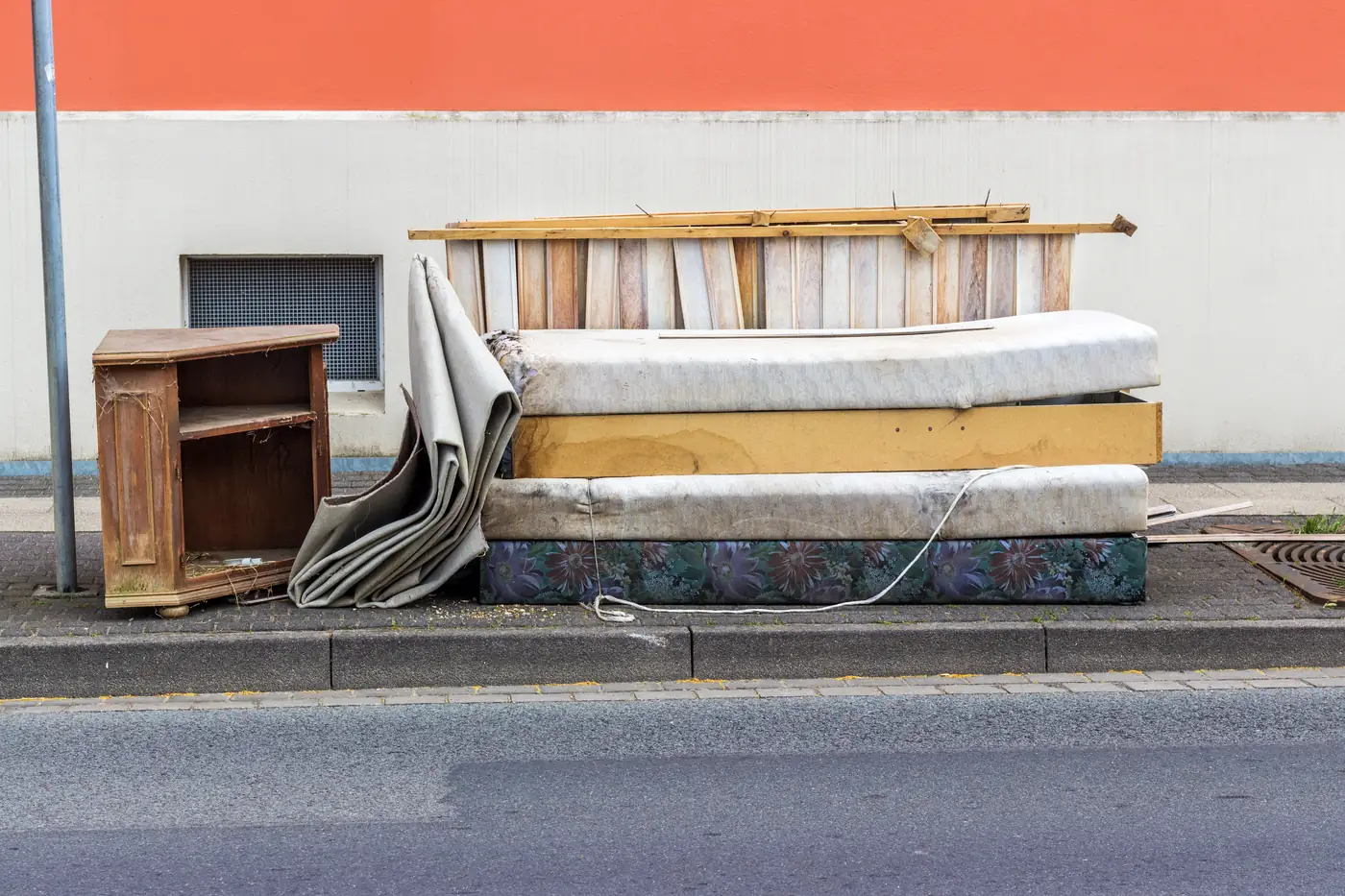
FreeA piano is bulky furniture if it is at the front curb. Movers who also haul are the usual route.
Who qualifies: Residences with City of Garland sanitation service.
How to schedule: No appointment. Brush and bulky goods are collected every week from the front curb on the same day as your green trash cart. Set bulky items out no earlier than 6 p.m. the day before and by 7 a.m. on collection day, in separate piles at least 4 feet apart: brush, bulky goods, appliances, and bagged leaves and grass. Residents can also haul bulky waste free to the city Transfer Station at 1434 Commerce St.
Limits: Weekly, resident-generated only. Construction and demolition waste from your own project may be set out 4 times per calendar year. Glass must be boxed.
Set-out: Between the sidewalk and curb in the front yard (never the alley), not under power lines or branches, 4 feet from mailboxes, boxes, and other piles, with no cars parked in front.
Donation pickup in Garland (usable pianos)
FreeDonation programs accept items in good usable condition: clean upholstered furniture without significant tears or stains, working appliances less than 10 years old, mattresses in good condition (subject to program rules), kitchenware, lamps, and most household goods.
Items typically not accepted: damaged or stained furniture, mattresses with bedbug history or significant wear, appliances that don’t work, particle-board furniture in poor condition, cribs (federal safety regulations have changed), and exercise equipment that requires reassembly. Always call the program before scheduling.
Freemoval (free pickups through partner organizations)
FreeFreemoval funds free junk removal and cleanouts for households referred by trusted partner organizations, such as nonprofits, housing programs, and senior services. Families don’t apply directly. A partner submits the request and vouches for the need.
Status in Garland: Not yet available. Freemoval currently serves metro Atlanta and plans to expand nationwide.
How it works where it operates: One free pickup per household, covering pianos, furniture, appliances, and bulk household items within standard LoadUp marketplace service. Funded by LoadUp customer round-ups and direct contributions, spent at standard LoadUp rates.
If you run a nonprofit or housing program in Garland: you can start the conversation now through the For partners page.
Garland, Texas (#93 nationally) is in the Dallas-Fort Worth metroplex and operates one of the most generous bulk programs in the country: weekly brush and bulky pickup from the front curb on the SAME day as regular trash collection. This is genuinely unusual nationwide, most cities offer bulk monthly, quarterly, or twice annually. Garland Sanitation also operates Hinton Landfill and a free Transfer Station. Customer service: (972) 205-3500 at 1434 Commerce Street. Holiday curbside service is mostly unaffected (only New Year’s, Thanksgiving, and Christmas trigger one-day delays). Find your collection day and bulky pickup using the MyGarland address lookup tool. This guide covers every disposal option for City of Garland residents.
The Garland rule for pianos: A piano is bulky furniture if it is at the front curb. Movers who also haul are the usual route.
Program basics: Weekly, resident-generated only. Construction and demolition waste from your own project may be set out 4 times per calendar year. Glass must be boxed. Between the sidewalk and curb in the front yard (never the alley), not under power lines or branches, 4 feet from mailboxes, boxes, and other piles, with no cars parked in front.
What the city will not take: Contractor-generated waste, household trash bags, paint, propane tanks, and household chemicals. Tires and electronics are not brush and bulky goods.
How we checked this. The rules on this page were verified in October 2026 against: City of Garland Environmental Waste Services: Brush and Bulky Goods, City of Garland: Accepted and Unaccepted Materials (brush and bulky). Programs change; confirm fees and limits before you go.
Why pianos are different from ordinary bulk. Pianos combine multiple disposal challenges: extreme weight, fragility (the soundboard cracks easily, harp and strings are under massive tension), valuable internals (cast iron harp is worth meaningful scrap value, soundboard wood may be antique), and specialized handling requirements (piano dollies, special straps, often staircase navigation).
Three mistakes that get pianos left at the curb:
When free options don’t work or you need fast disposal:
Specialized Piano Movers
$150 to $500 localSpecialized piano movers (search “piano movers [your city]”) have the equipment and training to safely move pianos within metros. Pricing typically $150 to $300 for upright pianos, $300 to $500 for baby grands, $500 to $800+ for concert grands.
Haul-and-dispose option: Many movers will haul AND dispose for an additional fee, ask explicitly. Often the cheapest path if you can’t find a free taker.
LoadUp paid piano pickup
$80+For Garland households needing in-home pickup, large cleanouts beyond a single week’s curbside bulky capacity, construction debris in volume, or service when crew labor is needed (heavy items, multi-piece sets), LoadUp connects you with independent loaders in the DFW metro for upfront-priced pickup.
What’s included: Loading, hauling, and licensed disposal of your piano. No prep needed beyond pointing out what goes.
Pricing: Starts around $80 for a single item; full-truck pickups range from $300 to $600 depending on volume.
If you can pay for a pickup, your booking helps fund free pickups for someone else. Every paid LoadUp customer can opt in to round up at checkout, and 100% of round-ups go directly to Freemoval’s subsidized jobs.
Book piano pickup in Garland with LoadUp → Round-up option appears at checkout. Optional, opt-in only.
Rules change at city limits. If you are outside Garland proper, start with the guide for your own city:
Related guides: the complete Garland junk removal guide (every item type, city services, hazardous waste, and how to report dumping) and the national piano disposal guide with rules for all 117 cities we cover.
Other free removal guides for Garland: mattress, couch, refrigerator, washer and dryer, furniture, tv and electronics, dresser, bed frame and box spring.
Does Garland pick up pianos for free?
Yes, if it is at the curb on your trash day. Moving it there usually needs a paid crew.
Where can I donate a piano in Garland?
Donation programs accept items in good usable condition: clean upholstered furniture without significant tears or stains, working appliances less than 10 years old, mattresses in good condition (subject to program rules), kitchenware, lamps, and most household goods.
How much does paid piano removal cost in Garland?
Through the LoadUp marketplace, a single piano pickup in Garland starts around $80 to $100 with upfront pricing, and full-truck loads run $300 to $600 depending on volume. For Garland households needing in-home pickup, large cleanouts beyond a single week’s curbside bulky capacity, construction debris in volume, or service when crew labor is needed (heavy items, multi-piece sets), LoadUp connects you with independent loaders in the DFW metro for upfront-priced pickup.
I have a free piano. Will anyone really take it?
Yes, almost certainly. Pianos, even older, out-of-tune ones, have takers in nearly every U.S. metro. Craigslist Free section is the fastest channel: list with brand, model, age, condition, dimensions, photos, and access details. Most listings get inquiries within 24 to 48 hours. Buyer typically handles transportation. The takers include: piano hobbyists who restore for resale, families seeking starter pianos, churches, schools, theater companies. Even a free non-working upright piano typically finds a taker for the cast iron harp scrap value alone.
How much does piano removal cost?
Specialized piano movers typically charge $150 to $300 for an upright piano move within a metro, $300 to $500 for a baby grand, $500 to $800+ for a concert grand. Removal-only (where the mover hauls and disposes) often costs slightly more than a typical move because of disposal fees ($30 to $80 added). Stairs add $50 to $150 per flight. Long carries (parking far from the home) add $50 to $100. Total typical removal: $200 to $500 for an upright, $400 to $800 for grands. Always get 2 to 3 quotes.
Can I disassemble a piano myself?
Strongly discouraged. Pianos contain a cast iron harp under 18 to 22 tons of string tension, releasing it improperly can cause serious injury. Even disassembly of unstrung pianos is labor-intensive and requires specialized tools. If you absolutely want to DIY, watch instructional videos first, work with at least one helper, and never cut strings under tension. The labor-time cost-benefit usually doesn’t justify DIY disassembly, a piano disassembly service ($300 to $500) handles 4 to 8 hours of work professionally.
My piano is 50+ years old. Is it valuable?
Maybe. Pre-1980 high-end American pianos (Steinway, Mason & Hamlin, Baldwin, Knabe, Chickering) are often worth $1,000 to $5,000+ in working condition because of solid construction and rebuildable mechanisms. Pre-1980 lower-end American or imported pianos are typically worth $0 to $300 because of declining quality. Get a piano technician’s assessment ($50 to $100 fee) before assuming low value, serial number lookups and condition checks can identify high-value pianos that look undistinguished. PianoBuyer.com has free serial number lookups.
Is this Garland page maintained?
Yes. Freemoval maintains this page as a public resource alongside the full Garland guide. We update it when programs change rules, fees, or contact methods. Last updated October 2026. If you find outdated information, let us know.