A public resource guide
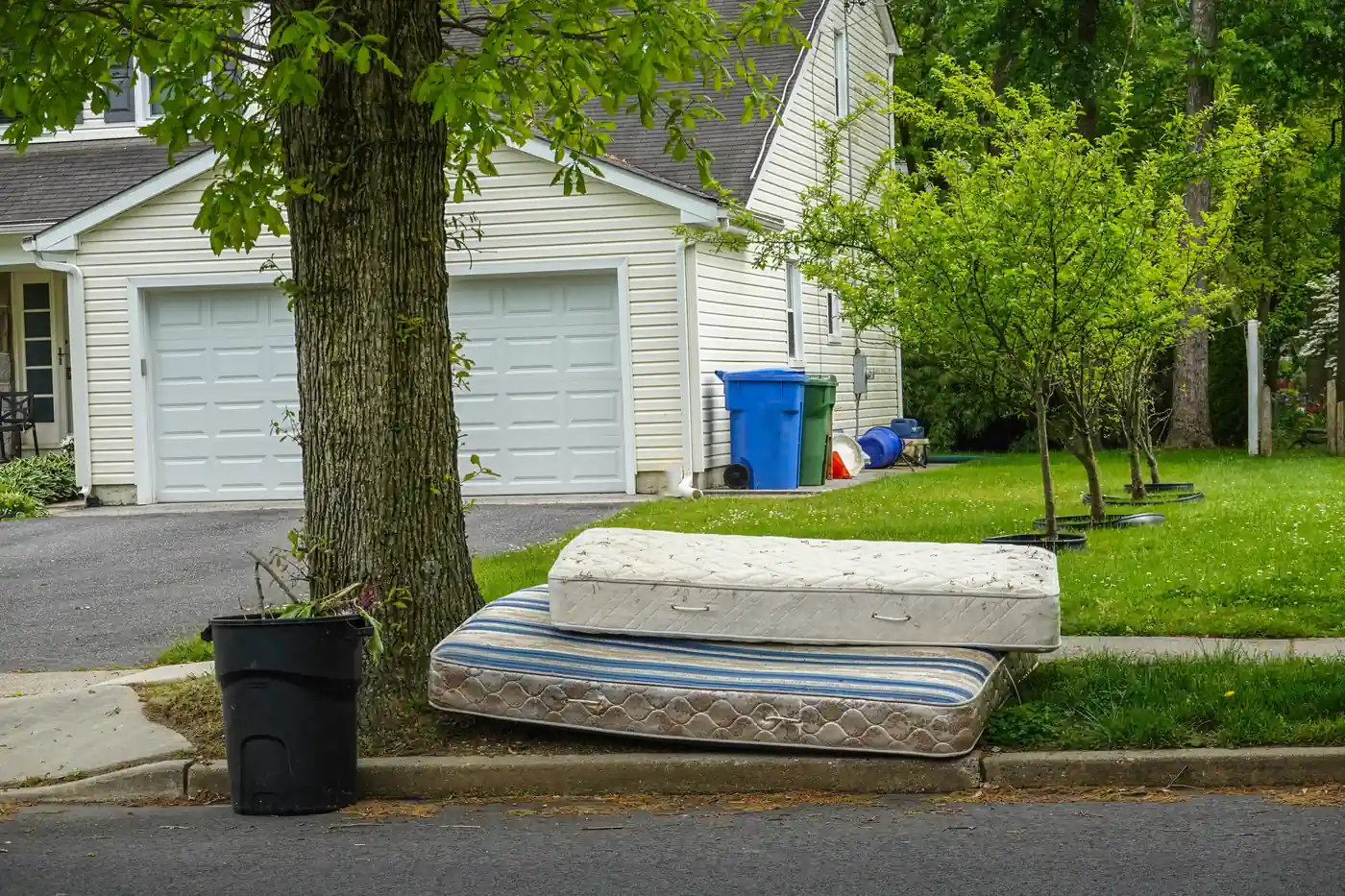
Call 311 or book at 311.dc.gov (or the DC 311 app) before putting anything out. Appointments are usually 10 to 14 days out.
Checked October 2026 against official city sources · Maintained by Freemoval as a public resource
DC has a clean appointment-based system through 311 with one of the strictest set-out windows in the country: between 6:30 PM the night before and 6:00 AM the day of your appointment, period. Bulk pickup is capped at 7 items per appointment, and only single-family homes and buildings with 3 or fewer units qualify, a hard cutoff that excludes most apartment dwellers. The Fort Totten Transfer Station provides free drop-off for District residents who can self-haul. This page walks through every legitimate option in order from free to paid.
Start here
What brings you to this page today?
On this page
DC residents have appointment-based bulk pickup through 311 (max 7 items per appointment), free drop-off at Fort Totten Transfer Station, free Special Waste Collection Events for electronics and HHW, and donation pickup programs. The DC Department of Public Works (DPW) collects from single-family homes and residential buildings with three or fewer living units. Apartment buildings with four or more units, condominiums, co-ops, and other commercial properties must use private licensed haulers.
Bulk pickup via 311 (max 7 items per appointment)
Free with serviceDC residents schedule bulk pickup through DC 311 (online at 311.dc.gov, the 311 mobile app, or by phone). DPW collects up to 7 items per appointment from eligible residences. The system is appointment-based with no set per-year limit, but appointments are typically completed within 14 business days of scheduling.
Eligibility: Single-family homes and residential buildings with 3 or fewer living units that receive DPW trash collection. Apartment buildings with 4+ units, condos, co-ops, and commercial properties must use private licensed haulers.
Limit: 7 items maximum per appointment. Schedule another appointment for additional items.
Strict set-out window: Items must be placed out between 6:30 PM the night before and 6:00 AM the day of your appointment. Items in the public space at any other time can result in a sanitation violation ticket.
Toilet rule: All toilets (porcelain or plastic, tanks or bowls) must be wrapped in plastic sheeting or heavy-duty plastic bag and sealed with tape or ties before set-out. This protects sanitation workers from germ exposure.
Tires: Tires are NOT collected curbside. Up to 4 tires may be taken to Fort Totten Transfer Station Wednesday-Friday 10 AM-2 PM only.
NOT accepted: Renovation materials (bricks, concrete, ceiling tiles), construction and demolition materials, dirt. Use the MWCOG Builders Recycling Guide for these items.
Fort Totten Transfer Station (free drop-off)
Free for residentsDC residents can take acceptable bulk items, trash, and recycling to Fort Totten Transfer Station free of charge with proof of District residency. Located at 4900 John McCormack Rd NE. The fastest option if you can self-haul, no appointment needed.
Address: 4900 John McCormack Rd NE, Washington, DC 20011.
What you need: DC driver's license OR (if from another state) photo ID plus current utility bill (within 30 days) or residential lease/deed. Names must match. All waste must originate within DC.
Acceptable vehicles: Passenger cars, vans, SUVs, pickup trucks, vans under 15 feet, rental vehicles within these categories.
What's accepted: Most bulk items, regular trash, recycling, wooden pallets, electronics. Tires (max 4) Wed-Fri 10 AM-2 PM only.
Useful for: Items you can't wait 14 days for, items above the 7-item appointment limit, items the city excludes, residents in apartment buildings without DPW service.
Special Waste Collection Events
Free, by reservationDPW hosts Special Waste Collection Events throughout the year for electronics recycling, hazardous waste disposal, and document shredding. Residents can reserve a 15-minute drop-off slot for quick service. Open to DC residents only with proof of residency. No commercial waste accepted.
What's accepted: Electronics (TVs, computers, peripherals), household hazardous waste (paint, chemicals, batteries, motor oil), document shredding.
How to use: Reserve a 15-minute slot in advance. Bring proof of DC residency.
Yard waste collection (up to 20 bags)
Free with appointmentDPW will collect up to 20 paper bags of yard waste from residences that receive DPW trash and recycling collection services. Schedule through 311. Yard waste can also be dropped off at Fort Totten during normal business hours.
Limit: 20 paper bags per appointment.
How to schedule: 311 (web, app, or call).
Drop-off alternative: Fort Totten Transfer Station accepts yard waste during normal business hours.
Freemoval (free pickups through partner organizations)
FreeFreemoval funds free junk removal and cleanouts for households referred by trusted partner organizations, such as nonprofits, housing programs, and senior services. Families don’t apply directly. A partner submits the request and vouches for the need.
Status in Washington: Not yet available. Freemoval currently serves metro Atlanta and plans to expand nationwide.
How it works where it operates: One free pickup per household, for junk removal and cleanouts within standard LoadUp marketplace service. Funded by LoadUp customer round-ups and direct contributions, spent at standard LoadUp rates.
If you run a nonprofit or housing program in Washington: you can start the conversation now through the For partners page.
Donation-pickup programs
FreeDC-area nonprofits offer free pickup for items in usable condition.
The Salvation Army: Free pickup of clothing, furniture, household items. Schedule at satruck.org or call 1-800-SA-TRUCK.
Habitat for Humanity ReStore: DC-area locations. Pickup for furniture, appliances, building materials.
Goodwill of Greater Washington: Donation pickup for larger items in the DC metro area.
Once-a-week trash collection. Most DC households follow a once-a-week schedule for trash and recycling. Some neighborhoods with narrow streets and alleys receive twice-weekly trash collection, these households use the smaller 32-gallon “mini-Supercan” while most use the standard 96-gallon Supercan.
Hard cutoff at 4+ units. DPW collects from single-family homes and residential buildings with 3 or fewer living units. Apartment buildings with 4+ units, condos, co-ops, and mixed-use residential/commercial buildings must contract their own trash and recycling collection from a private licensed hauler. This is enforced, if you live in a 4+ unit building, you cannot use city service even if the address lookup tool shows a trash day.
Strict set-out window. Trash and recycling containers must be placed out for collection no earlier than 6:30 PM the night before collection and no later than 6 AM on collection day. Containers must be removed from public spaces by 8 PM on collection day. Setting out at any other time can result in code enforcement violations.
Holiday “Slide Guide.” When a trash and recycling collection day falls on a holiday, collections “slide” to the next day for the rest of the week through Saturday. For example, if a holiday falls on Monday, DPW will collect Monday routes on Tuesday, Tuesday on Wednesday, and so on through Saturday. In twice-weekly collection neighborhoods: Monday and Thursday collections move to Tuesday and Friday; Tuesday and Friday move to Wednesday and Saturday.
Mandatory recycling. Recyclables must be empty, dry, and loose, never in plastic bags. Paper bags are okay, but loose is preferred. Trash should go in plastic bags inside the green trash bins.
Composting. DC's curbside composting pilot (2023-24) transitioned to a broader Food Waste Collection Program with curbside participants, drop-off sites, and “smart bins” throughout the city. There may be a waitlist for curbside enrollment, but all residents can use food-scrap drop-offs and smart bins.
Container responsibility. DPW provides initial containers and will replace and repair certain ones (serial numbers starting with W# for trash and R# for recycling). Containers with serial numbers starting with DC# will not be repaired. Free replacement containers are not provided, residents must pay for new containers via credit card, check, or money order.
Department of Public Works. 899 North Capitol Street NE, Washington DC 20002. Phone: 202-673-6833. dpw.dc.gov.
Washington's donation programs accept items in good usable condition: clean upholstered furniture without significant tears or stains, working appliances less than 10 years old, mattresses in good condition (subject to program-specific rules), kitchenware, lamps, and most household goods.
Items typically not accepted: damaged or stained furniture, mattresses with bedbug history or significant wear, appliances that don't work, particle-board furniture in poor condition, cribs (federal safety regulations have changed), and exercise equipment that requires reassembly. Always call before scheduling if you're unsure, pickups that find unacceptable items will leave them behind.
For households who exceed 7 items per appointment, can't wait the typical 14 business days, live in 4+ unit buildings (excluded from DPW service), or have items the city won't take (renovation materials, construction debris), paid options are available. Note: Fort Totten Transfer Station is free for DC residents and may be the best option if you can self-haul.
LoadUp paid pickup
$80+For households who can't wait for an appointment slot, exceed the 7-item appointment limit, or live in 4+ unit buildings (excluded from DPW service), LoadUp offers professional removal in DC with upfront pricing. Independent loaders in the marketplace handle pickup, loading, and licensed disposal.
What's included: Loading, hauling, and licensed disposal. No prep needed beyond pointing out what goes.
Pricing: Starts around $80 for a single item; full-truck pickups range from $300 to $600 depending on volume.
Other paid services in DC: 1-800-Got-Junk, College Hunks Hauling Junk, Junk King, comparison-shop for larger jobs.
If you can pay for a pickup, your booking helps fund free pickups for someone else. Every paid LoadUp customer can opt in to round up at checkout, and 100% of round-ups go directly to Freemoval’s subsidized jobs.
Book a DC pickup with LoadUp → Round-up option appears at checkout. Optional, opt-in only.
Different items have different rules in Washington. Here's a quick reference for the most common things people need to dispose of.
DC hosts Special Waste Collection Events throughout the year for residents to dispose of electronics, hazardous waste, and to shred documents. Reserve a 15-minute drop-off slot in advance and bring proof of DC residency. No commercial waste accepted. Several retailers also offer ongoing free recycling: Home Depot for batteries and CFL bulbs, AutoZone for motor oil and car batteries, Best Buy for electronics, and most pharmacies for unused medications.
To report illegal dumping in DC, call 311 or visit 311.dc.gov. Reports can also be filed via the DC 311 mobile app. Include the location, description of dumped material, and a photo if possible. DC takes illegal dumping seriously, with active code enforcement. If you're considering dumping because you can't wait for an appointment or live in a building DPW doesn't serve, please use Fort Totten Transfer Station, it's free for DC residents and you can typically be in and out within an hour. A LoadUp pickup at $80 is also dramatically cheaper than dumping fines.
Each guide below takes the Washington rules on this page and adds item-specific prep, donation standards, and the free routes that exist outside city programs: mattress, couch, refrigerator, washer and dryer, furniture, tv and electronics, dresser, bed frame and box spring, dishwasher, air conditioner, water heater, hot tub, piano, tires, exercise equipment, desk and office furniture, patio furniture, pool table, carpet and rugs, grill, trampoline and playset, lawn mower, scrap metal, construction debris, yard waste, toilet, bathtub, and sink, moving boxes and cardboard.
Is there really free junk removal in DC?
Yes, DC residents in single-family homes or buildings with 3 or fewer units can schedule free bulk pickup through DC 311 (online at 311.dc.gov, the 311 mobile app, or by phone). Each appointment covers up to 7 items, and there's no set per-year limit. Fort Totten Transfer Station also offers free drop-off for District residents with proof of residency. Special Waste Collection Events for electronics and hazardous waste are free with advance reservation. Donation pickup through Salvation Army, Habitat ReStore, and Goodwill is also free for usable items.
When can I put my bulk items out for pickup in DC?
DC has one of the strictest set-out windows in the country: items must be placed at the curb between 6:30 PM the night before and 6:00 AM the day of your appointment. Items in the public space at any other time can result in a sanitation violation ticket. After collection, removed any leftover materials or unaccepted items immediately, the city does not police remaining materials, that's your responsibility.
Why do I need to wrap a toilet in plastic before set-out?
DC requires all toilets (porcelain or plastic, tanks or bowls) to be wrapped in plastic sheeting or a heavy-duty plastic bag and sealed with tape or ties before placement at the curb. This safety measure protects sanitation workers from germ exposure during handling. Toilets without proper wrapping will not be collected.
I live in an apartment building in DC. What are my options?
DPW only serves single-family homes and residential buildings with 3 or fewer living units. Apartment buildings with 4+ units, condos, co-ops, and mixed-use buildings must use a private licensed hauler. Even if the DPW address lookup shows a trash day, you cannot use city service if your building has 4+ units. Your options: (1) Ask your property manager what bulk service the building’s contracted hauler provides. (2) Self-haul to Fort Totten Transfer Station (free for District residents with valid ID). (3) Use a paid hauler. This gap is exactly why Freemoval exists.
How do I qualify for Freemoval in DC?
Freemoval is not yet available in Washington. It currently serves metro Atlanta and plans to expand nationwide. Where it operates, it works through partner organizations rather than direct applications: a nonprofit, housing program, or caseworker submits the request and vouches for the need, so there is no income paperwork. If you work at a nonprofit or housing program in Washington, you can start the conversation through the For partners page.
How do I dispose of construction debris in DC?
Renovation materials (bricks, concrete, ceiling tiles), construction and demolition materials, and dirt are NOT accepted in DPW bulk collection from residences. Visit the MWCOG (Metropolitan Washington Council of Governments) Builders Recycling Guide for a list of construction and demolition companies that may haul these items. Wooden pallets are accepted at Fort Totten Transfer Station. For larger renovations, dumpster rental is typical.
How do I report illegal dumping in DC?
Call 311 or visit 311.dc.gov. Reports can also be filed via the DC 311 mobile app. Include location, description of dumped material, and a photo if possible.
Is this page maintained?
Yes. Freemoval maintains this page as a public resource. We update it when programs change rules, fees, or contact methods. Last checked October 2026. If you find outdated information, let us know.
Freemoval currently serves metro Atlanta and plans to expand nationwide. Reach out now to start the conversation before the program reaches Washington.
Start a partnership conversation